
Launching an App That Rethinks Habit Tracking Through Simplicity
iOS App Design and Development


macOS App Design and Development
Project
Lodestone, an AI journal for the Mac
Problem
AI journals wanted to talk, interrupting your writing. Chatbots couldn't remember your life in enough detail.
My Role
Solo designer and developer, from concept to the Mac App Store
Outcome
Launched on the Mac App Store and iterating based on user feedback
The Problem
I kept my journal in plain text on my Mac. Raw thoughts, nothing else on the page. I didn't want a different way of journaling. I wanted help making sense of what I had written.
Existing AI Journals
AI journals existed, but they had gone in a different direction. Questions popping up while you write, a chat as the main experience, scores and streaks. The AI had moved onto the page and become the point.
The AI was capable. It was just in the wrong place.
Using Chatbots
I tried pasting entries into Claude. First, one at a time, but it knew nothing about the people in them, what had happened before, or what I had already tried. Then all of them at once, hundreds of entries, but in that wall of text the answers lost focus and went generic.
They didn't know me well enough, and getting anything useful meant pasting my journal in again every time.
I wanted help thinking, not a conversation.
The Design Principle
Every decision came back to one line: a notebook first, not a chatbot you talk to.
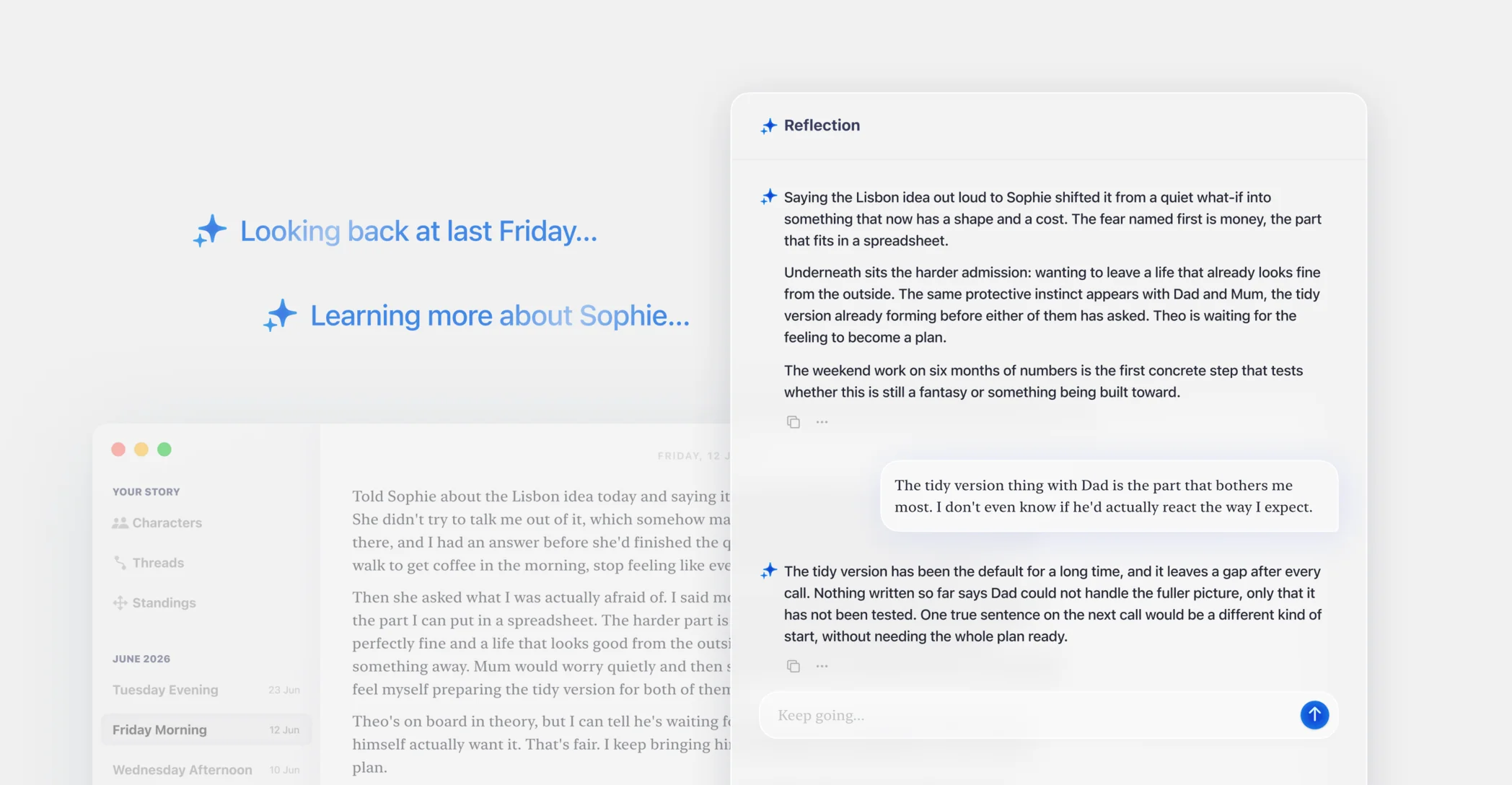
The page comes first, always. Open a new entry and there is nothing in front of you but a blank page. No prompt, no analysis, nothing to steer what you write before you write it.
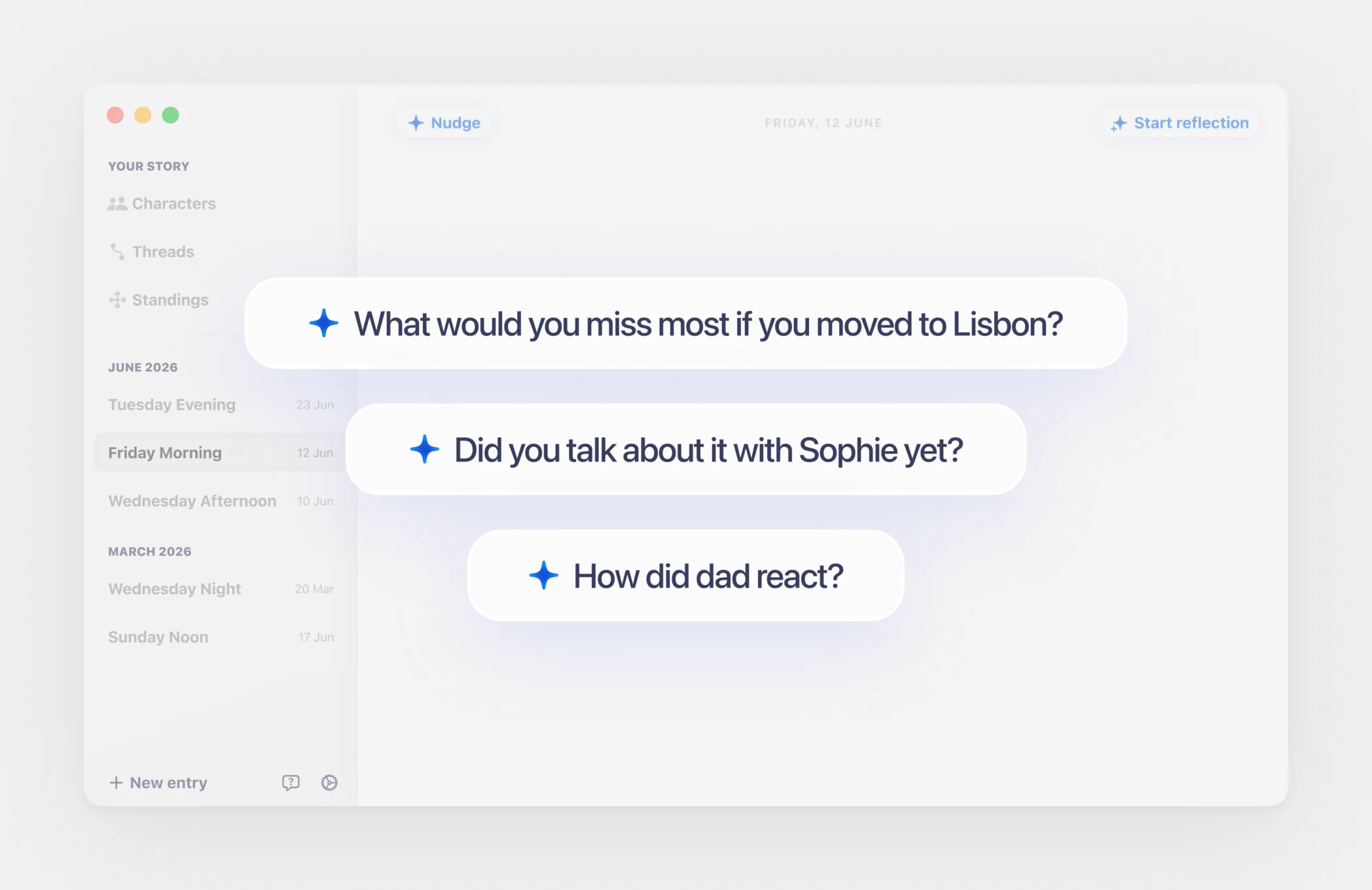
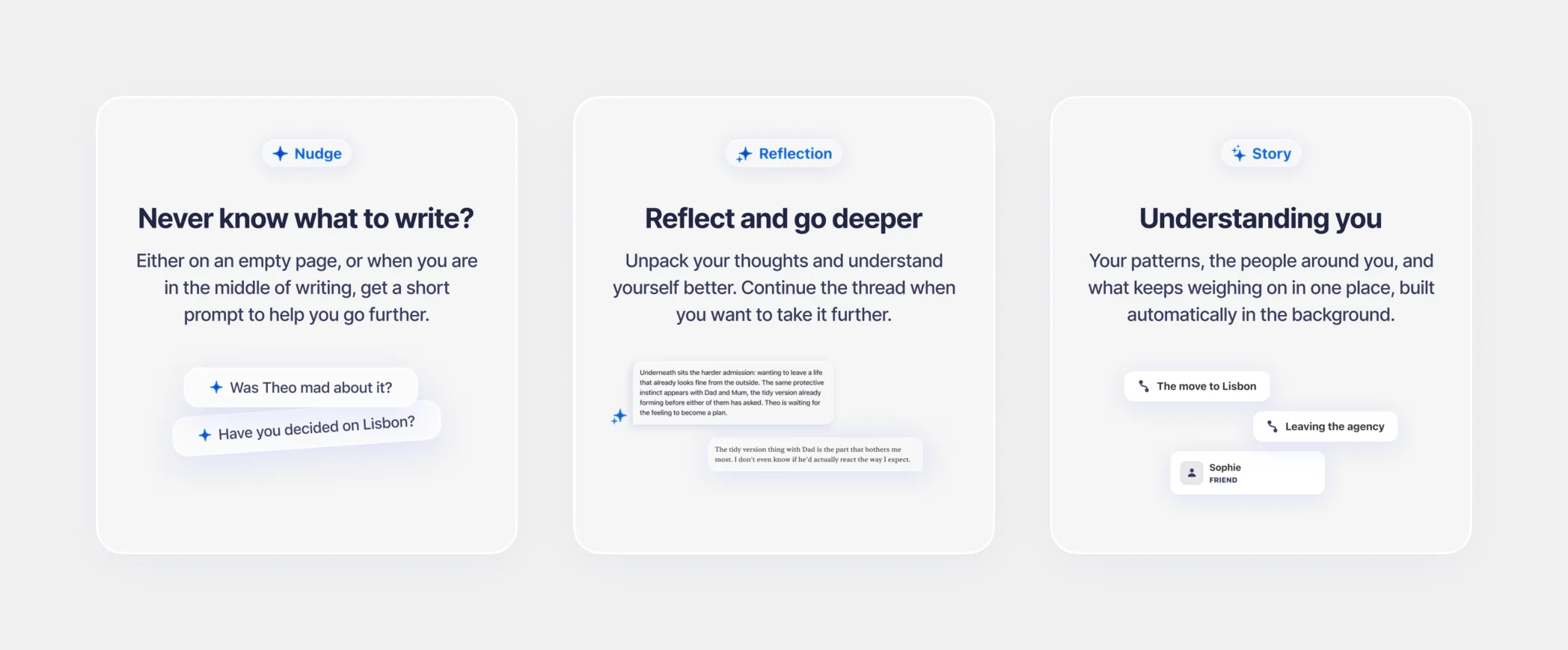
Help waits to be asked. Stop typing for a few seconds and a small "Need a nudge?" fades in below your last line. Start typing again and it fades away. The option to reflect only appears once an entry has enough in it to reflect on.
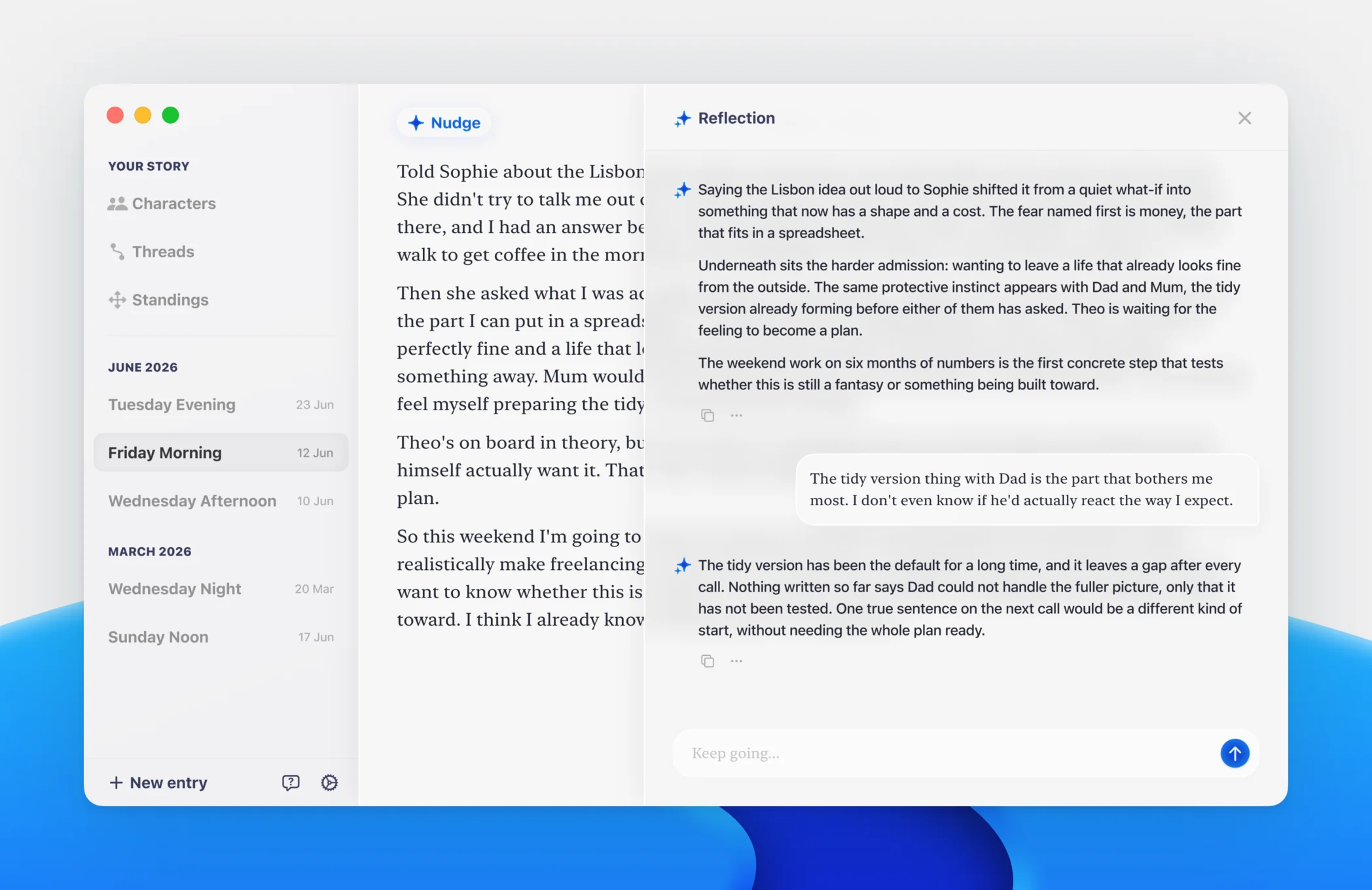
And the AI never writes on your page. Nudges sit in a bar at the bottom and disappear. Reflections open in their own panel, with your entry still visible behind it. The page only ever holds your words.
A notebook first, not a chatbot you talk to.
What I Chose Not to Build
The category had converged on engagement. Streaks to protect, reminders to write, badges for consistency, and mood charts that turn an entry into "40% anger, 20% sadness". Some apps offer dozens of frameworks to journal through.
I left all of it out. Each one turns a private place to think into something you have to manage, and none of them help you understand anything. A mood percentage measures you. It doesn't help you move.
Nothing to write means nothing to write.
Building the Memory
The chatbots had shown me the hard part. One entry gave the AI too little context, and all of them gave it too much. I had to solve that before building an app around it, so I tested approaches on my own journal first.
The standard approach is to search for the entries most similar to what you just wrote. It kept missing things. The connections that matter in a journal are often between things that don't look alike, like stress at work and a gym habit you dropped months ago.
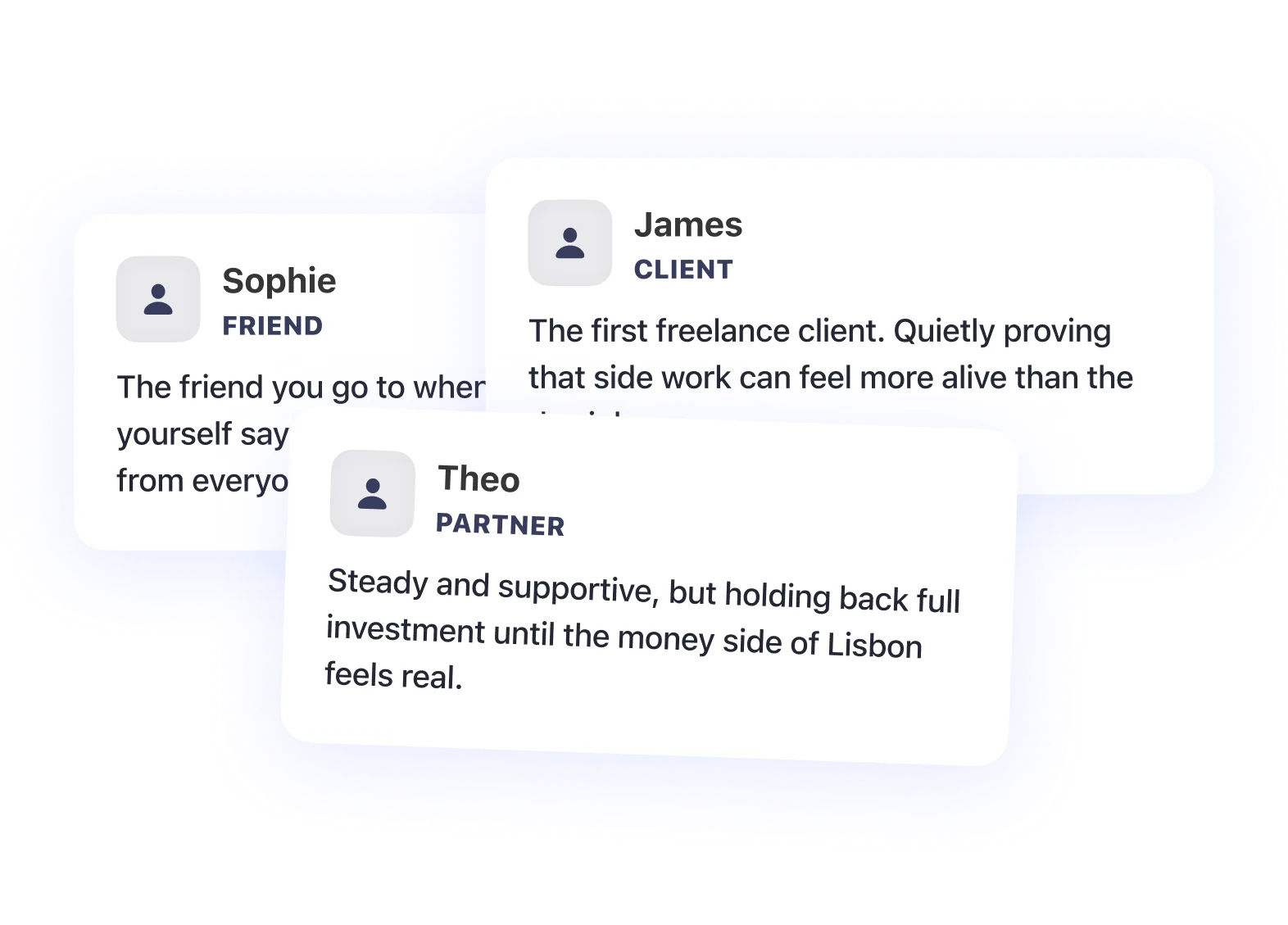
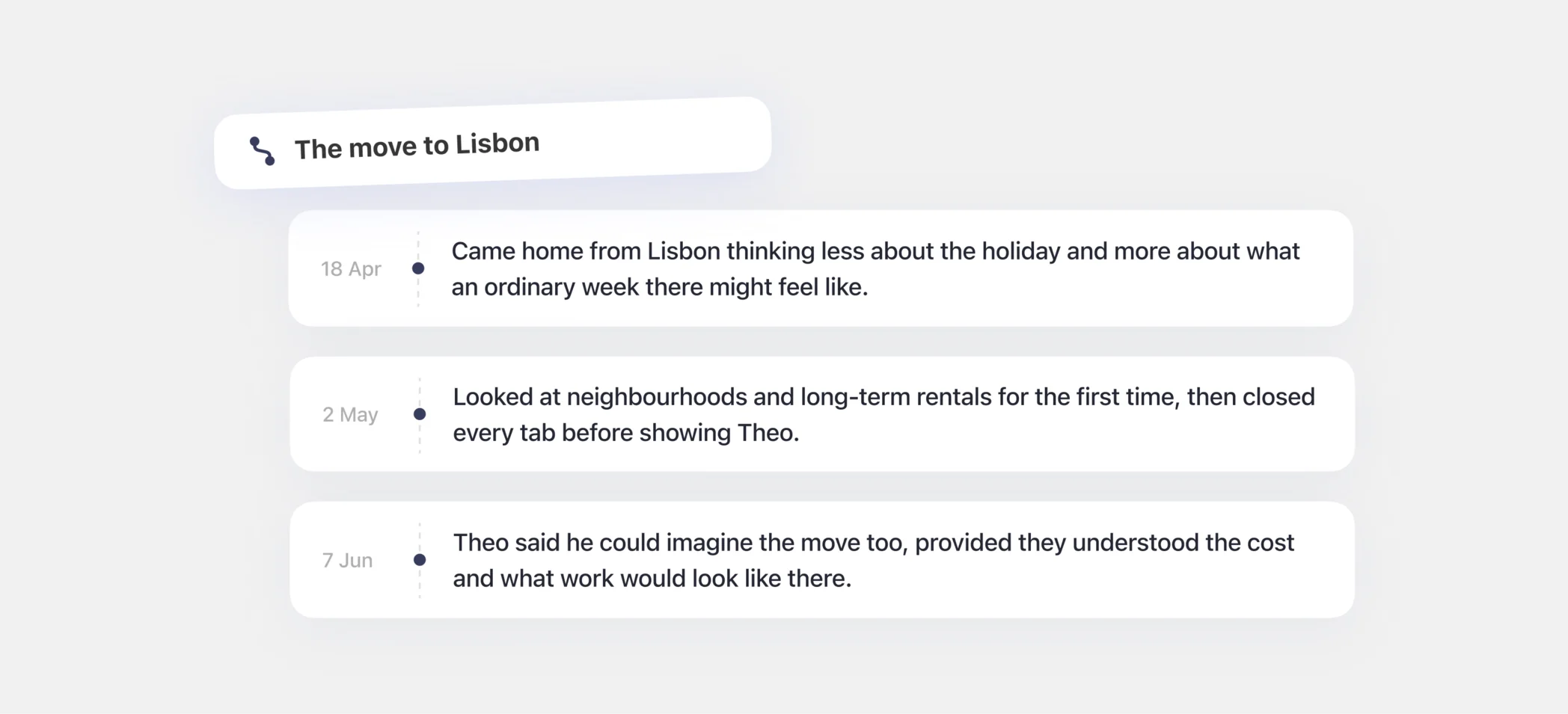
What worked was reading every entry in the background and sorting it into the people in your life, the situations you keep coming back to, and where you stand on things. Each reflection starts from that overview, then pulls up your exact words when it needs them. That is how it can connect today's entry to something from months ago.
The Human in the Loop
An AI that builds an understanding of your life will sometimes get it wrong, so everything it understands is visible and yours to fix. You state what is true in your own words, and it is applied every time the memory is rebuilt.
The Result
Lodestone is live on the Mac App Store. I designed, built and launched it solo, from the writing surface to the engine behind it to the video that introduced it.
I launched it with a maker post on Reddit, and people recognised the problems from their own experience, from AI taking the personal touch out of a journal to the generic answers you get from pasting in a pile of entries.
Since then, users have shared what it does for them. Some noticed patterns in their lives they had never connected before. Others said the reflections helped them make sense of their own thoughts, or come to terms with things they had been carrying. A few found parts of their life that needed more attention, like habits that had quietly grown bigger than they realised.
Visit the Lodestone websiteListening After Launch
Launch is only the beginning. You can't know how people will use something until they've tried it, so I ship fast and keep iterating based on real needs and feedback. For example:
And the list keeps growing.
iOS App Design and Development
 viktorpeschka
 AmsterdamNL